
This article explains how amateur leagues can technically replicate the on-body feel of professional soccer jerseys, covering fabrics, GSM, fit, ventilation, certification, MOQ, and supplier selection for consistent B2B procurement.
Definition
What is replicating the feel of professional soccer team jerseys for amateur leagues? It means using comparable fabrics, construction, fit, and finishing to deliver similar on-body performance for non-professional teams at scalable B2B volumes.
- Match professional jersey fabric using 130–170 GSM performance polyester blends with moisture management
- Replicate slim athletic fits via accurate grading, size runs, and tolerance control
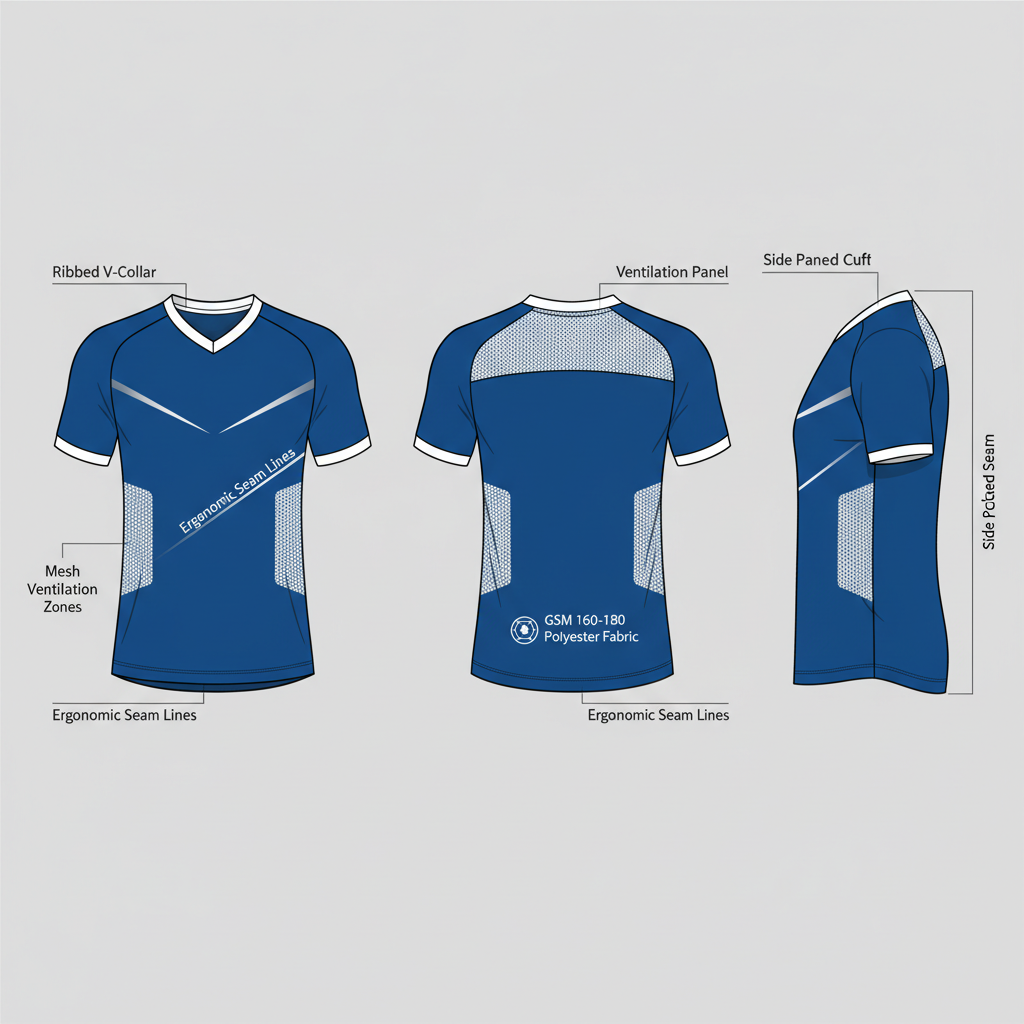
- Specify breathable mesh zones, flatlock or clean seams, and high-stretch collars
- Align decoration methods (sublimation, heat transfer, embroidery) with durability targets
- Control quality through certifications, lab testing, and documented QC checkpoints
- Plan MOQ, lead time, and replenishment to support growing amateur leagues
Technical Foundations: What Makes a Jersey Feel Professional
From a procurement perspective, replicating the feel of professional soccer team jerseys is a technical specification exercise, not an aesthetic one. Stadium jerseys typically combine engineered polyester, controlled GSM, mapped ventilation, compression-informed pattern cutting, and precise finishing tolerances. For amateur leagues, our task is to define each of these parameters in a way that is repeatable across seasons and suppliers.
Most professional match jerseys sit in the 130–160 GSM range for the main body fabric, with lighter mesh panels in the 100–130 GSM range. Fibre composition is usually 100% polyester or a polyester–elastane blend, with mechanical or chemical wicking treatments. Stitching is minimised in high-friction areas and collars use high recovery rib or elastic binding to prevent deformation after repeated washing.
Fabric, GSM and Construction: Getting the Core Specification Right
The fabric decision has the highest impact on perceived quality for amateur players. We generally advise buyers to start with two or three clear fabric specifications that can cover 80–90% of team requirements and then test them with sample runs before committing to bulk orders.
- Main body: 140–160 GSM interlock or double-knit polyester, moisture-wicking, with a 4-way stretch of at least 15–20%
- Side panels and underarms: 110–130 GSM mesh polyester, air permeability above 200 mm/s (lab tested)
- Collars and cuffs: 180–220 GSM rib-knit or elastane blend, stretch recovery above 90% after 50 wash cycles
- Optional compression zones: 180–200 GSM higher-density knit for torso stability in performance lines
Stitching density often ranges between 8–10 stitches per centimetre for structural seams. Flatlock or coverstitch is used for seams close to the skin to reduce chafing. We recommend documented tolerances, for example ±3% on GSM, ±0.5 cm on key body measurements, and colour delta E below 2.0 between batches for consistent team appearance.
To study current benchmarks, buyers can review existing professional designs in categories such as World Cup team jerseys. A structured review of products in collections like World Cup soccer jerseys can help define target fabric weight, structure, and ventilation patterns before writing the technical pack.
Fit, Pattern Making and Size Consistency for Amateur Teams
Professional jerseys use an athletic cut, typically 3–5 cm slimmer at chest and waist than standard retail sport T-shirts for the same size. For amateur leagues, we usually propose two fit blocks: a performance fit with minimal ease and a regular fit with an additional 3–4 cm in chest and hip circumference to accommodate varied body types.
Grade rules should be clearly stated, for example 4 cm chest increment between sizes and 2 cm body length increment, from XS to 3XL. A structured size curve forecast is also essential; many amateur leagues see 60–70% of orders concentrated in M–XL, which affects fabric purchase planning and MOQ negotiations.
To replicate the professional feel, we typically set measurement tolerances at ±1 cm for high-volume production, with random sampling of 2–3% per batch. This is supported by a sealed reference sample for each style that both buyer and supplier accept as the standard.
Branding, Printing Technologies and Color Control
Decoration significantly affects comfort. For example, large PVC prints can compromise breathability and add stiffness. Professional jerseys rely heavily on sublimation and lightweight heat-transfer technologies to keep the fabric hand-feel soft while delivering full-coverage graphics and sponsor logos.
In amateur leagues, sublimation is cost-effective for complex graphics at quantities above approximately 50 sets per design, while cut vinyl or digital transfers suit smaller, variable-name orders. Embroidery is usually limited to club crests due to added weight and potential skin irritation on the inner side.
| Feature | Traditional Amateur Jerseys | Modern Professional-Style Amateur Jerseys |
|---|---|---|
| Fabric GSM | 170–200 GSM basic polyester, limited wicking | 140–160 GSM engineered polyester with moisture management |
| Ventilation | Uniform fabric, few or no mesh panels | Mapped mesh zones at sides, back and underarms |
| Fit profile | Loose, generic T-shirt block | Athletic cut with graded size rules and tight tolerances |
| Branding method | Heavy screen prints, thick vinyl numbers | Sublimated graphics, lightweight heat transfers |
| Seam technology | Standard overlock seams | Flatlock or clean-finished seams in high-friction areas |
Color consistency is another differentiator. We generally use Pantone references and require lab dips and strike-offs. A delta E below 2.0 across batches helps avoid visible differences when teams replenish 20–30% of kits mid-season. This requires supplier capability in color management and documented calibration of sublimation printers or screen setups.
Compliance, Certifications and Supply Chain Transparency
Amateur leagues increasingly expect the same safety and social compliance standards as professional organisations. For fabrics, OEKO-TEX STANDARD 100 certification reduces risk related to restricted substances, especially for youth teams. On the manufacturing side, BSCI or equivalent social audits are often requested by clubs linked to educational institutions or municipal programmes.
If recycled content is part of the brand story, GRS-certified yarns or fabrics provide traceability. In our experience, buyers who mandate GRS often set a minimum of 30–50% recycled polyester content, accepting a modest cost increase of roughly 8–15% versus virgin polyester, depending on market conditions.
For transparency, procurement teams should request factory profiles, production line layouts, and monthly capacity data. For example, a mid-size jersey factory may state a capacity of 30,000–50,000 jerseys per month, with standard MOQs around 100–300 pieces per design for sublimation and 300–500 pieces per colour for solid dyed fabrics.
MOQ, Lead Times and Production Planning for Amateur Leagues
Lead time is typically split into fabric milling or sourcing (15–25 days), sample approval (7–10 days), bulk production (20–30 days) and logistics. In total, most amateur league jersey projects require 45–70 days from final approval to delivery, depending on order volume and shipping method.
For MOQs, we usually see three models: per design (for sublimation), per colour (for dyed fabric), or per total order. Aligning your league’s expected team count and replacement rate with these structures can reduce dead stock. Many buyers allocate 10–15% additional quantity for mid-season size changes and late registrations.
When assessing a supplier, we recommend discussing capacity allocations for peak periods, such as pre-season. Clarifying whether the supplier can reserve lines or guarantee a certain weekly output (for example, 5,000 jerseys per week for your league) reduces the risk of delivery slippage.
Step-by-Step Guide: Moving from Concept to Replicated Professional Feel
- Step 1: Benchmark 3–5 professional jerseys by fabric hand-feel, GSM and ventilation, and translate observations into measurable specifications.
- Step 2: Define fit blocks, grading rules, and size curves based on your league’s player data, including youth and adult ranges.
- Step 3: Select decoration methods (sublimation, heat transfer, embroidery) aligned with your logo complexity, name/number variability, and durability targets.
- Step 4: Approve lab dips, strike-offs and size sets, then confirm tolerances for GSM, measurements and colour deviation in the technical pack.
- Step 5: Negotiate MOQ and lead time scenarios, including an agreed plan for mid-season replenishment and emergency top-ups.
- Step 6: Implement a structured QC protocol, including pre-production samples, inline checks and final random inspection with AQL standards.
- Step 7: Review first-season performance feedback from players and equipment managers and refine specs for the following season.
For additional background on our approach to specification management and B2B servicing in the soccer jersey space, procurement teams can review our company information on About our soccer jersey capabilities and use the contact channels there as needed.
Frequently Asked Questions
Procurement teams that require tailored guidance on GSM selection, fit blocks, or printing methods for their specific league structure can open a technical discussion via the channels listed on Contact for soccer jersey B2B projects and share existing samples or target specifications.