
Youth Custom Soccer Jerseys Wholesale: Safety Standards, Fabric, and MOQ
Overview
Youth teamwear buying decisions are rarely about price alone. This guide explains how B2B buyers evaluate safety checkpoints, fabric choice, size grading, decoration risk, and MOQ structure when sourcing youth custom soccer jerseys for school, club, and retail programs in the USA and Europe.
What buyers mean by safety in youth teamwear
For USA and Europe, youth programs are usually screened against children’s apparel requirements rather than adult fanwear assumptions. Buyers should review neck shape, cord use, toggles, labels, prints, and small trims at prototype stage because the main risk often sits in components, not only in the shell fabric.
That is why we treat drawstring risk in youth garments as a design issue before it becomes a testing issue. A jersey that looks acceptable on an adult sample can still create avoidable failure points once scaled for youth sizing.
Fabric selection should match age group and use case
When comparing youth team jersey options, fabric weight and recovery matter more than catalog photography. For school teams and academies, buyers usually want a stable polyester base that dries quickly, holds color after repeated washing, and still works with namesets and patches.
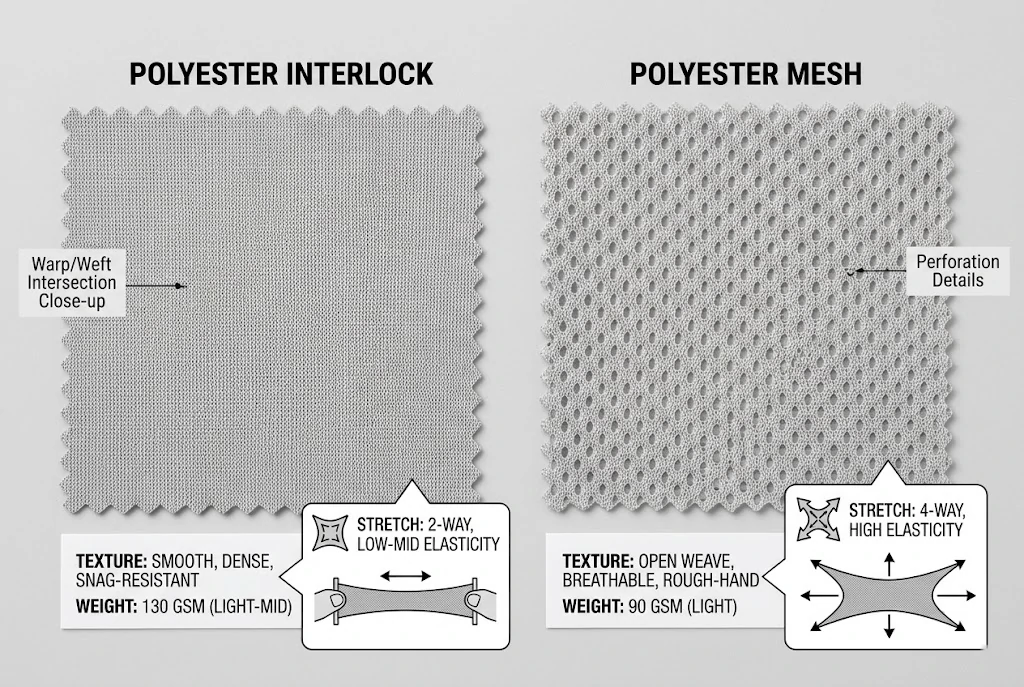
For younger age groups, buyers often ask whether the body fabric, print layer, and trims are tested for harmful substances before bulk approval. That question is reasonable because youth compliance is about the full garment system, from thread to buttons and labels.
Decoration and trim choices affect compliance
Namesets, heat-applied crests, woven labels, zipper garages, and contrast tapes can change the risk profile of an otherwise simple jersey. In youth custom programs, safer execution usually means fewer protruding details, cleaner trim rules, and earlier control of decoration materials.
We therefore recommend reviewing the decoration and sampling workflow before approving player names, sponsor marks, sleeve patches, or individual packaging. It shortens approval cycles because technical risk is discussed before the bulk layout is locked.
Size grading and fit consistency matter in reorder programs
Youth sizing is less forgiving than adult fanwear because schools and clubs reorder by age band, not by style preference. A workable size set should cover chest ease, body length, and sleeve opening consistently across repeated orders.
For USA and Europe, the real issue is not whether a supplier offers many sizes, but whether the grading logic stays stable when the same design is reordered next season. That affects returns, coach complaints, and mixed-carton planning.
MOQ should be tied to customization depth
MOQ for youth custom soccer jerseys should be discussed after the buyer defines what is actually custom. A blank body with stock fabric and variable names is a different program from a fully bespoke jersey with a custom collar, jacquard rib, woven labels, and retail packing.
We usually suggest separating sample MOQ, first bulk MOQ, and repeat MOQ. That gives buyers a clearer cost picture and prevents overbuying before the size ratio, print durability, and team approval process are fully confirmed.
Documents buyers should request before approval
Before PO approval, buyers should ask for test scope, fabric specification, colorfastness records, print method confirmation, care label layout, and packing details. In cross-border youth orders, paperwork reduces risk more effectively than late-stage promises.
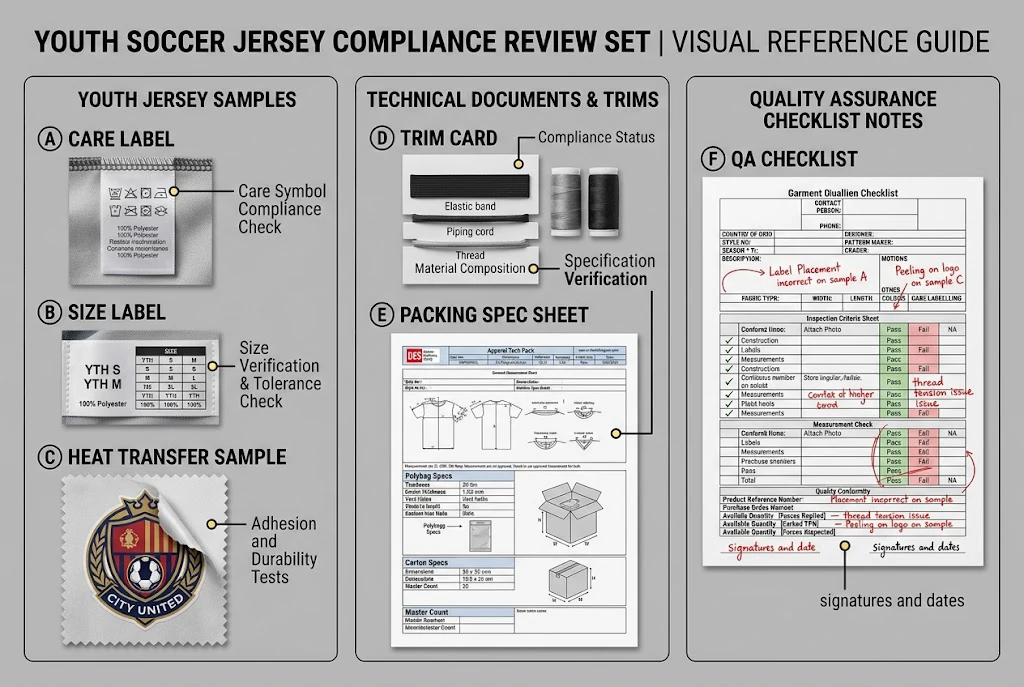
A supplier should be able to explain its material and quality control process in a way that matches the paperwork. When recycled polyester is used, buyers increasingly ask for supply transparency rather than a generic sustainability claim.
Frequently Asked Questions
Q: What safety checkpoints matter most before placing a youth jersey order?
A: Start with the parts that can fail compliance even when the jersey body looks fine: cords, toggles, labels, prints, and decorative trims.Then confirm testing scope, labeling, and size-set approval before bulk production. In youth orders, design review and paperwork should move together.
Q: Which fabric is usually safer for repeat school and club programs?
A: Most repeat programs use stable polyester interlock or mesh-based constructions because they balance drying speed, color hold, and decoration compatibility. The safer choice is usually the fabric with predictable wash performance and trim compatibility, not simply the softest sample.
Q: How should buyers discuss MOQ with a supplier?
A: Break MOQ into sample stage, first bulk stage, and repeat stage. That shows where customization actually changes cost. Buyers should also confirm whether names, numbers, badges, and packaging are included in the MOQ logic. Many sourcing misunderstandings start there.
Q: Can one size set work for both the USA and Europe?
A: Sometimes, but not automatically. Youth fit expectations and age labeling can differ between channels, clubs, and retailers. A shared pattern works only when the buyer confirms target measurements early and approves a size set before bulk production.
Ending
If you are sourcing youth teamwear for clubs, academies, or retail programs, contact our wholesale team to review fabric options, sample plans, and bulk pricing. We can help you compare safety checkpoints, customization depth, and MOQ structure before you commit to production.