
Why Team Soccer Uniforms Packages Yield the Highest B2B Profit Margins?
Overview
Team soccer uniforms packages often outperform single-item jersey orders in B2B sales. We break the topic into pricing layers, reorder behavior, freight efficiency, and demand visibility so buyers can judge which package model protects margin and scales cleanly.
What makes a package more profitable than a single jersey order
A package changes the commercial unit from one jersey to one usable team kit. When buyers quote jerseys, shorts, socks, numbering, and packing together, they measure margin on the whole roster instead of on the thinnest item in the deal.
That is why team soccer uniforms packages usually produce cleaner B2B economics. They raise the invoiced value per customer without forcing the sales team to acquire a new account for every extra line item.
Average order value rises faster than selling cost
The sales effort for a 300-player program is often similar whether the buyer orders only tops or a full match set. Once approvals, logos, and size curves are settled, adding shorts, socks, or goalkeeper kits lifts order value much faster than it lifts quoting time.
For academies that buy mixed age runs, adding Kids Soccer Jerseys to the same sourcing plan reduces approval time and keeps sizing logic under one vendor. That matters because margin loss often comes from coordination mistakes, not only from low unit pricing.
Decoration layers create controllable gross margin
The margin is usually strongest when custom sublimation and embroidery options are priced as part of the package rather than added after approval. Names, numbers, sponsor marks, sleeve badges, and retail-style packing each create small but measurable layers of gross profit.
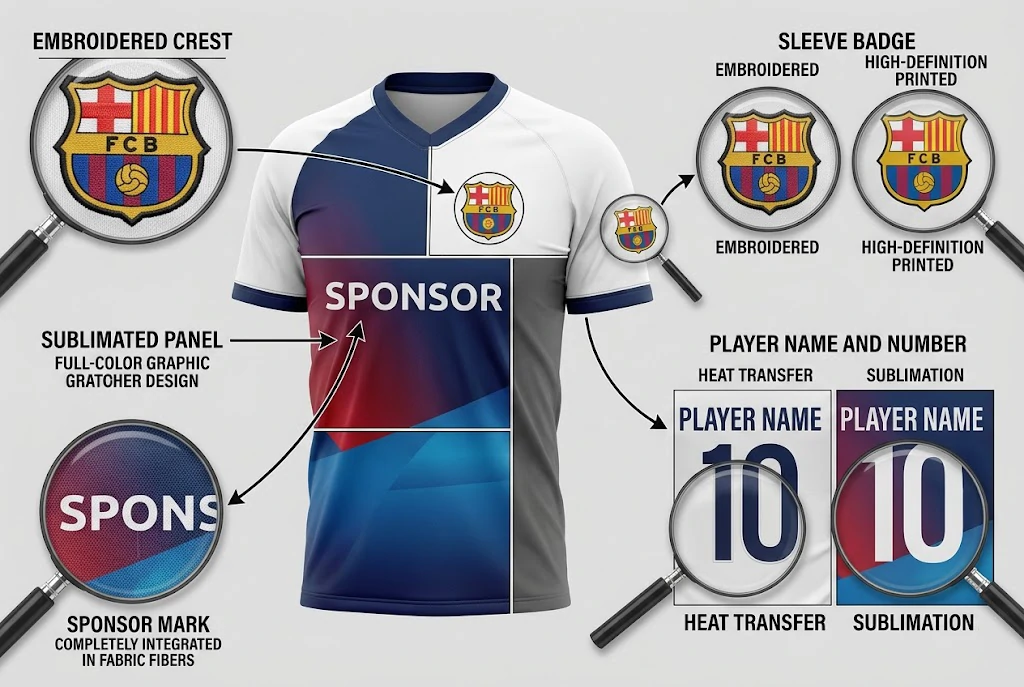
A disciplined approach to pricing custom apparel matters more than chasing the lowest blank cost. Buyers who understand decoration math can compare suppliers on process control, not only on the ex-factory jersey price.
Standardization lowers reorder friction and dead stock
Packages work best when the first order sets a repeatable structure: agreed size ratios, fixed trim rules, a goalkeeper option, and a clear reorder threshold. That reduces dead stock because the second and third purchases do not restart development from zero.
We usually see better margins when clubs approve one package matrix for match day, training, and youth extensions instead of sourcing each need separately. The supplier gains production rhythm, and the buyer gains faster replenishment.
Freight and carton planning protect landed margin
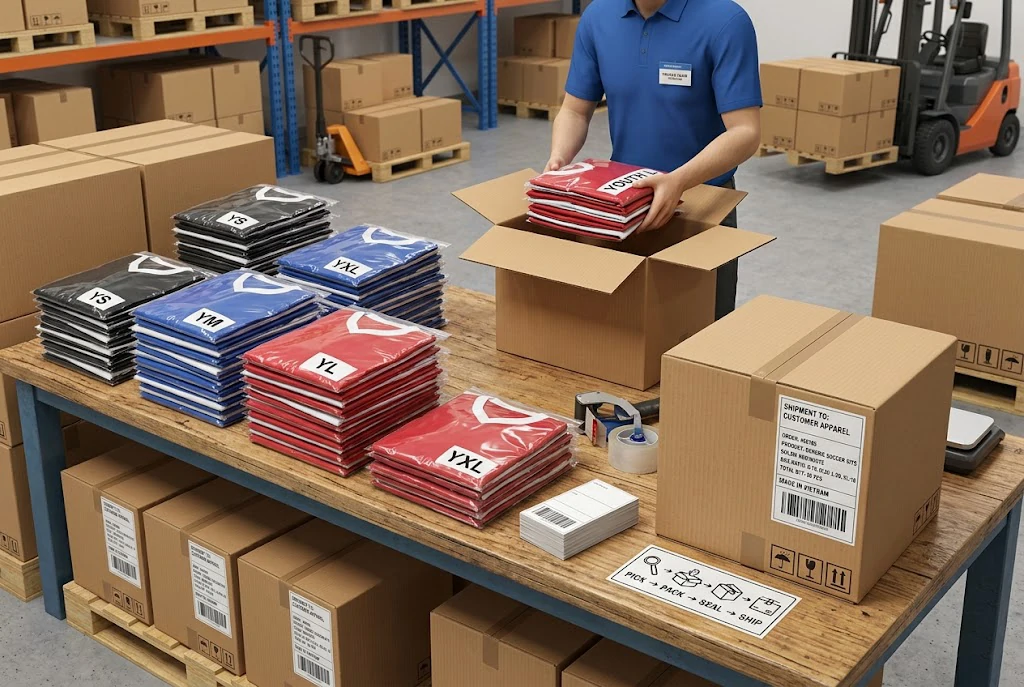
Landed margin can disappear even when factory pricing looks acceptable. Mixed cartons, split deliveries, and last-minute accessory additions increase chargeable volume, raise handling time, and weaken the predictability buyers need for wholesale programs.
That only works well when fabric consistency, AQL-based quality checks, and carton planning are controlled before bulk cutting starts. In B2B uniform supply, clean packing logic is often as important as the garment margin itself.
Demand visibility is stronger when team programs grow
Packages become more valuable when clubs, schools, and community programs plan earlier and buy across more categories. The medium-term demand case also improves as women’s football’s fan base expands across markets that now support more organized teamwear programs.
For buyers serving the USA and Europe, the practical takeaway is simple: the more predictable the team program, the more attractive a package model becomes. Stable demand lets buyers plan MOQs, replenishment windows, and decoration capacity with less margin leakage.
Frequently Asked Questions
Q: What should be included in a profitable team package?
A: A profitable package usually combines jerseys, shorts, socks, decoration, and basic packing rules into one quote. The point is to control the full order value instead of negotiating each item in isolation. For B2B buyers, the better package is not always the largest one. It is the one that keeps replenishment simple, size ratios clear, and margin visible after freight and customization.
Q: Are packages still profitable for small clubs or academy orders?
A: They can be, if the supplier uses standard trims, controlled decoration options, and pre-agreed carton ratios. Small orders lose margin when every detail becomes custom and approval cycles stretch. In practice, many buyers protect margin by limiting package variation at launch and widening the offer only after reorder patterns become clear.
Q: How do buyers compare package quotes from different suppliers?
A: Compare total landed logic, not just jersey unit price. A cheaper top can still produce a weaker result if numbering, socks, sampling, or split shipments are billed separately. We suggest checking size ratios, decoration method, carton plan, reorder lead time, and defect handling before deciding which package is truly more profitable.
Q: When does a single-item jersey order make more sense than a package?
A: Single-item orders fit testing phases, short campaigns, or channels where the buyer still does not know the real size curve. They also help when branding approval is incomplete and speed matters more than margin optimization. Once order rhythm becomes predictable, packages usually outperform single-SKU buying because the commercial and operational costs are spread across a larger and more repeatable basket.
Ending
If you are reviewing suppliers for your next season, ask us to quote the full package, not only the jersey. We can help you compare size ratios, decoration methods, MOQ breaks, and freight assumptions in one buying sheet. Use the link to discuss your bulk order requirements and request a wholesale price list, sample plan, or a custom quote for your market.