
How to Order Wholesale Jersey Cases Football Cheap for Retail Stores
Overview
Retail stores buying low-cost soccer jersey case packs need more than a low quoted unit price. This guide explains how to compare jersey types, pack ratios, landed cost, lead times, customization options, and quality controls before placing a wholesale order for the USA, Canada, or Mexico.
What Retail Stores Are Actually Buying
Retail buyers rarely win by chasing the lowest advertised jersey. They win by matching the right product family to the right shelf role: fast-moving fanwear, premium player-style options, or blank teamwear that can be decorated locally.
The phrase wholesale jersey cases football cheap usually reflects a case-buying intent. Stores want predictable cost, readable assortment, and enough margin after freight, markdown risk, and size breaks, so the order should be built around sell-through rather than a headline quote.
Choose the Right Jersey Mix Before Price Comparison
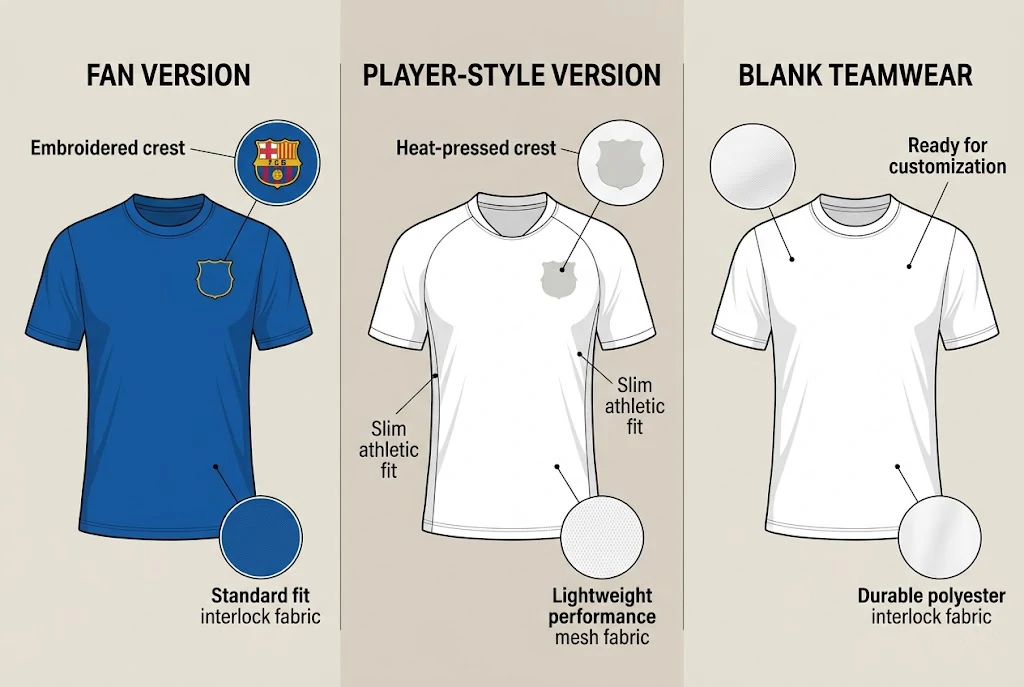
Fan versions usually fit mainstream retail more easily because pricing, durability, and size tolerance are simpler to manage. Player-style versions work better as a selective premium layer when your store already sells technical apparel at a higher price point.
If your store sells around tournament cycles or diaspora demand, start with national team jerseys before you widen the assortment. If you sell to schools, local clubs, or event decorators, blank jerseys may create steadier repeat volume than trend-driven fanwear.
Calculate Real Unit Economics, Not Only Quote Price
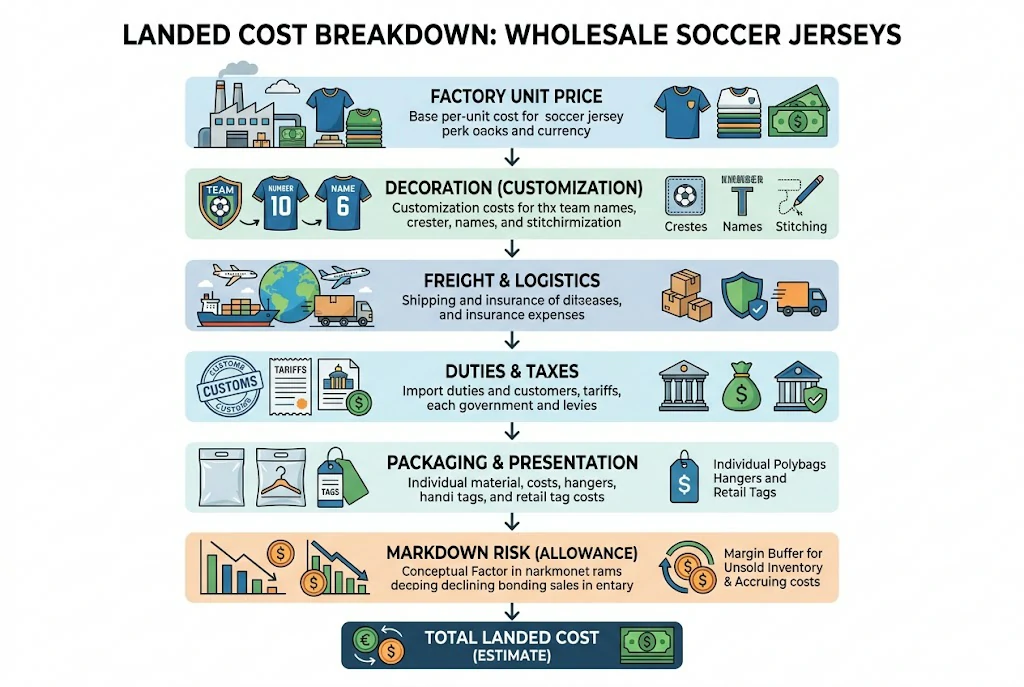
Retailers that compare only FOB quotes often miss the landed cost that decides the true shelf margin. FedEx explains landed cost as the total expense associated with shipping a product, including taxes and fees, and notes that importers need that figure before setting a profitable selling price.
For store buying, the real comparison should include jersey cost, decoration method, case ratio, import term, carton efficiency, and expected markdown on slower sizes. A slightly higher factory quote can still be cheaper if it reduces freight waste, damage risk, or dead stock.
Plan Case Packs and Reorder Timing by Region
A workable case pack should reflect how sizes move in your market instead of following a generic factory ratio. Stores in the USA and Canada often need stronger adult M to XL depth, while Mexico programs may need more deliberate balancing between youth sizes and smaller adult runs, depending on channel.
For North American stores, tournament visibility tightens buying windows as ticket demand continues to be high. Reuters reported on March 25, 2026 that FIFA expects the 1994 World Cup attendance record to be surpassed this summer, which supports the case for earlier assortment planning and faster replenishment decisions.
Check Customization and Shelf Presentation
Cheap case buying does not mean generic presentation. Ask early whether the supplier can handle custom names, numbers, badges, and private packaging without slowing replenishment. That matters when you want store-exclusive bundles, local club tie-ins, or cleaner shelf labeling.
For retail shelves, packaging should help staff read the product quickly: style code, team name, size range, and carton marks that survive cross-border handling. A good supplier should also confirm whether mixed styles in one case will create picking errors or damaged presentation.
Verify Quality Control Before Scaling
The first sample should not be judged only by front-view appearance. Reliable suppliers should explain fabric specs, measurement tolerance, and final inspection before carton sealing instead of relying only on sample photos.
Before you place a repeat order, ask for consistency rules: color match between lots, badge placement tolerance, stitching standards, and defect response. Retail problems usually begin when the second shipment looks different from the first, not when the first sample arrives.
Frequently Asked Questions
Q: What is the safest first order size for a retail test?
A: A focused first order is usually safer than a broad mixed buy. Start with one or two case packs tied to clear demand signals, then use early sell-through to decide whether to deepen by team, size range, or jersey type.
Q: Should stores buy fan versions, player-style versions, or blank jerseys first?
A: Fan versions usually fit mainstream retail best because they balance price, wearability, and turnover. Player-style versions suit premium shelves, while blank jerseys work better when your store plans to add local decoration or teamwear services.
Q: How should we compare two wholesale quotes fairly?
A: Compare the full order structure rather than only the unit price. Case ratio, packaging, decoration method, shipping term, defects handling, and replenishment speed often change the real margin more than a small gap in the quoted jersey price.
Q: What should we confirm before placing a repeat bulk order?
A: Before scaling, confirm that the supplier can repeat fabric handfeel, color consistency, measurement tolerance, carton labeling, and delivery timing. A reorder is only safe when the second shipment can match the first in sellable quality and shelf presentation.
Ending
If you are planning a retail test or a larger seasonal buy, contact our wholesale team with your target teams, case quantity, and delivery window. We can help you review price-list options, sample priorities, and custom packing requirements so your next wholesale order is built for margin, repeatability, and faster shelf turnover.