Bulk Buy Football Kits: A Step-by-Step Guide for Independent Retailers
Overview
This guide explains how independent retailers should plan football kit purchases for the USA, Canada, and Mexico, with clear advice on product path, licensing, timing, size ratios, specifications, MOQ, quality control, and replenishment.
Define the product path before you compare quotes
When independent retailers plan to bulk buy football kits, the first decision is not price. It is whether the assortment will be built around licensed fanwear, blank teamwear for decoration, or a mix of both. Each route changes margin expectations, reorder speed, and compliance requirements.
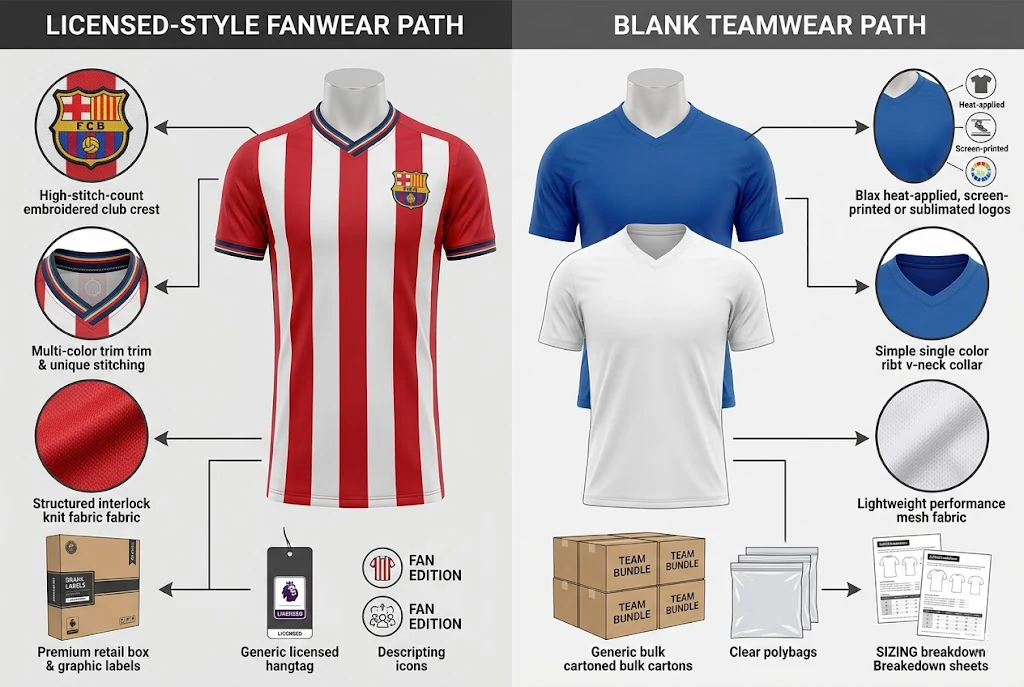
If a kit uses team logos or player names, retailers need to confirm that the merchandise is licensed for resale before they compare margin alone. Licensed lines such as national team jerseys should be planned separately from blank teamwear built for schools, local clubs, and decorators.
Build the buying calendar around demand windows
Independent retailers usually lose money in football apparel for one of two reasons: they buy too early and sit on cash, or they buy too late and miss the demand spike. A useful calendar starts from the local sell-through window and works backward to sampling, approval, production, and inbound delivery.
In the USA, Canada, and Mexico, the 2026 World Cup also changes timing because soccer attention in North America is rising ahead of the tournament. That does not mean every SKU will move fast, but it does mean retailers should place event-linked buys with tighter SKU discipline and clearer reorder triggers.
Set size ratios by channel, not by instinct
A good opening order reflects who will actually buy the stock. A city-center football shop, a suburban sporting goods store, and a marketplace seller can all sell the same design with very different size curves and pack ratios.
For independent retailers, the safer approach is to start from sales channel and audience mix, then build the assortment around a narrow number of proven styles. Too many colors or badge variants can make the shelf look rich while quietly breaking replenishment efficiency.
Match fabric and decoration to your price tier
Retail buyers should treat specification as a sell-through decision, not only as a factory detail. Fabric weight, hand feel, collar structure, crest method, and print durability all shape how customers compare value once the kit is in hand.
If you need heat-transfer names, embroidered badges, or private packaging, confirm those service details before sample approval rather than after bulk production starts. This is especially important when one line is meant for value retail and another is meant for higher perceived detail.
Compare MOQ, replenishment, and landed cost together
A low MOQ looks attractive only when the first order works commercially. In practice, buyers should compare three numbers together: opening order volume, repeat order threshold, and the real landed cost after freight, packaging, and shortage risk are included.
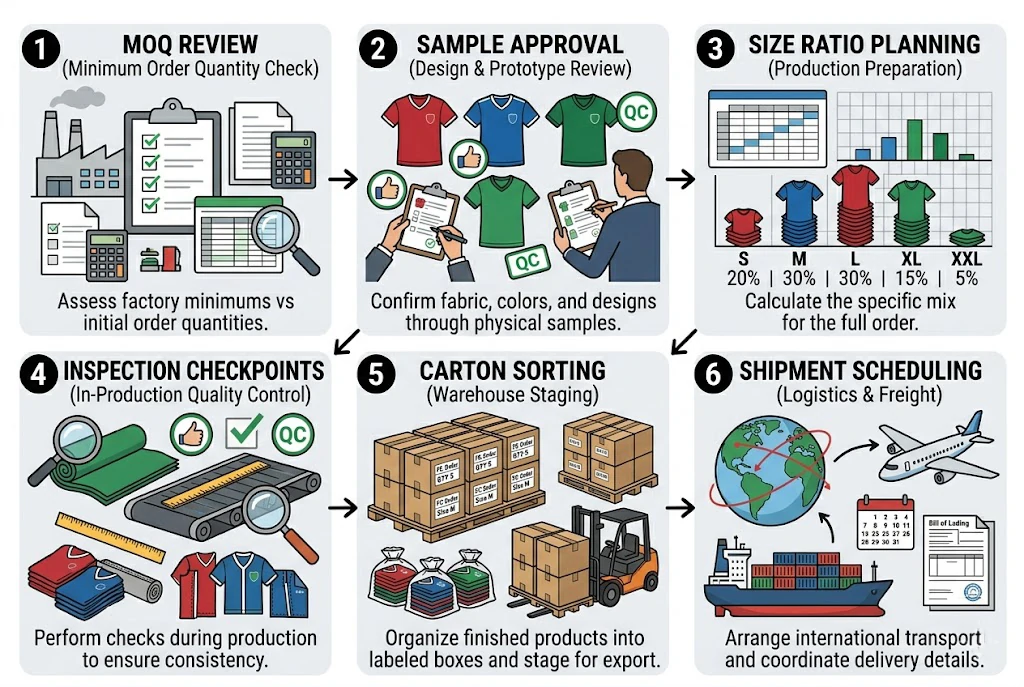
The better supplier conversation is not “What is your MOQ?” but “What order size lets us test the range without breaking the size curve or making replenishment too slow?” That question usually leads to a more usable buying plan and fewer dead sizes after launch.
Put quality and fulfillment controls into the PO
Most avoidable disputes happen because the purchase order is too thin. Retailers should lock the spec sheet, approved colors, badge placement, carton marks, barcode logic, and shipment split before deposit, not during final balance discussions.
AQL-based inspection, measurement tolerance checks, and carton-level verification reduce costly disputes after the goods leave port. If the order is split across stores, marketplaces, or distributors, the carton plan should reflect that from the start rather than being patched in at dispatch.
Frequently Asked Questions
Q: Should independent retailers source licensed fanwear and blank teamwear in the same buying program?
A: They can, but only when the supplier separates product logic clearly. Licensed fanwear is driven by rights, badge consistency, and sell-through timing, while blank teamwear is driven by decoration flexibility, repeatability, and faster replenishment.
Q: What is the safest first order size for a new football kit range?
A: The safest first order is not the smallest possible MOQ. It is the smallest order that still keeps a usable size curve, supports two or three core styles, and leaves room for a second buy if one design proves stronger than the rest.
Q: How early should retailers place an order before the main selling season?
A: Retailers should usually work backward from the shelf date and leave enough time for sampling, approval, production, freight, and receipt checks. The exact window depends on whether the line is stocked, customized, or built around event-driven demand.
Q: What must be approved before paying the deposit?
A: Retailers should approve the size spec, fabric reference, decoration file, packaging method, carton marks, and inspection standard before deposit. When those items stay verbal, small errors often become expensive once the order is already in transit.
Ending
If you need a cleaner assortment plan, a wholesale price list, or pre-production samples for your next season, contact our wholesale team to discuss your bulk order requirements. We can help you compare licensed lines, blank teamwear options, replenishment timing, and packaging details before you commit budget to a larger buy.