
Cheap Soccer Jerseys in Bulk: How to Avoid Substandard Asian Sizing Traps
Overview
This article explains how bulk buyers can reduce sizing risk when sourcing low-cost soccer jerseys from Asia. We cover measurement specs, grading tolerance, fit samples, fabric stretch, and carton planning so distributors and teamwear sellers can avoid avoidable returns and margin loss.
What the sizing trap really means
For buyers sourcing cheap soccer jerseys in bulk, the first problem is usually not fabric color or badge placement. It is the assumption that an Asian size label can be translated directly into a North American selling size without rebuilding the measurement logic.
We do not treat S, M, L, or XL as a specification. We treat them as sales labels only. Even when the silhouette looks familiar, buyers should still review manufacturer size charts instead of copying the previous supplier’s label logic. Brand-specific measurements vary, and localized selling often requires clearer size references than a single chart.
Start from target-market body expectations
A size program for the USA is not always suitable for Mexico, and a size program that works for Mexico may still create friction in Canada. The right starting point is the target customer profile: youth clubs, adult supporters, streetwear buyers, or online marketplace resellers.
Margin loss begins when the label stops predicting the fit. Across apparel categories, sizing is stopping consumers from shopping when the size they expect no longer matches what arrives, and inconsistent sizing also increases returns pressure for retailers.
Compare garment measurements, not label names
When we evaluate a jersey block, we look first at chest width, body length, shoulder width, sleeve opening, and hem width. If the supplier only shares a simple chest table, we assume the program is not mature enough for stable repeat orders.
For North American resale, the cleaner method is to show local references beside the original production measurements. That is why we prefer spec sheets that separate body guidance from garment data, instead of letting one Asia-based label carry the full selling decision. Localized size communication is a recognized best practice for international ecommerce.
Fabric and cut can distort the same size table
Two jerseys can share the same chest measurement and still fit differently. A lighter mesh body, a tighter sleeve angle, or a slimmer armhole can make one program feel a full size smaller at wear level even if the table looks acceptable on paper.
We also check recovery after stretch and the likely wash response. Lower-grade polyester can become visually tight or slightly transparent under tension, so a “correct” size on paper may still fail in real use if the fabric behavior is unstable. Vogue’s recent sizing coverage also notes that poor fit and fabric performance are part of what pushes shoppers away from a purchase.
Fit samples matter more than pre-production promises
We do not approve a bulk order from charts alone. A serious supplier should provide at least one fit sample set across the core sizes, especially when the program is meant for marketplaces, wholesale resale, or mixed adult-youth replenishment.
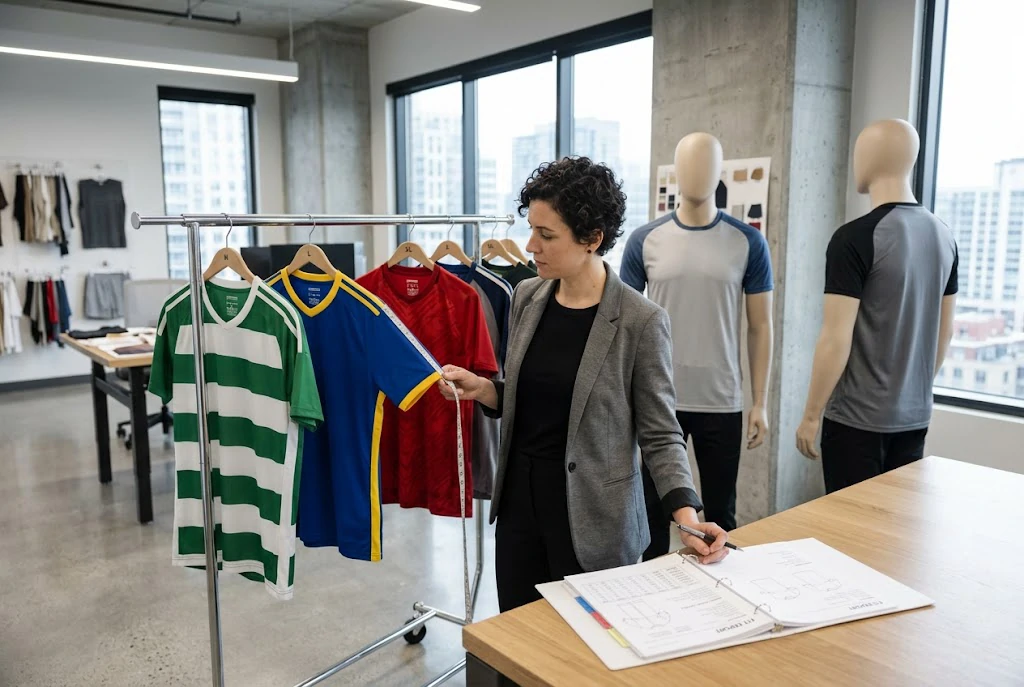
The sample stage is where we catch hidden problems: short body length on larger sizes, sleeves that bind after printing, or grading jumps that become too aggressive from L to XL. For programs built around repeatable country designs, buyers usually standardize blocks across national team jerseys instead of mixing every supplier’s fit logic in one catalog.
Control grading tolerance before you negotiate price
A cheap quote becomes expensive when size tolerance is loose. Buyers should ask how grading was built, which point of measure controls each jump, and what tolerance is allowed on bulk production for chest, length, and sleeve opening.
We also prefer suppliers that can provide fabric specs, shrinkage notes, and AQL inspection records before the PO is locked. That is more useful than a generic promise that the goods are “same as sample,” because it gives the buyer something measurable to audit before shipment.
Pack by sell-through logic, not by factory habit
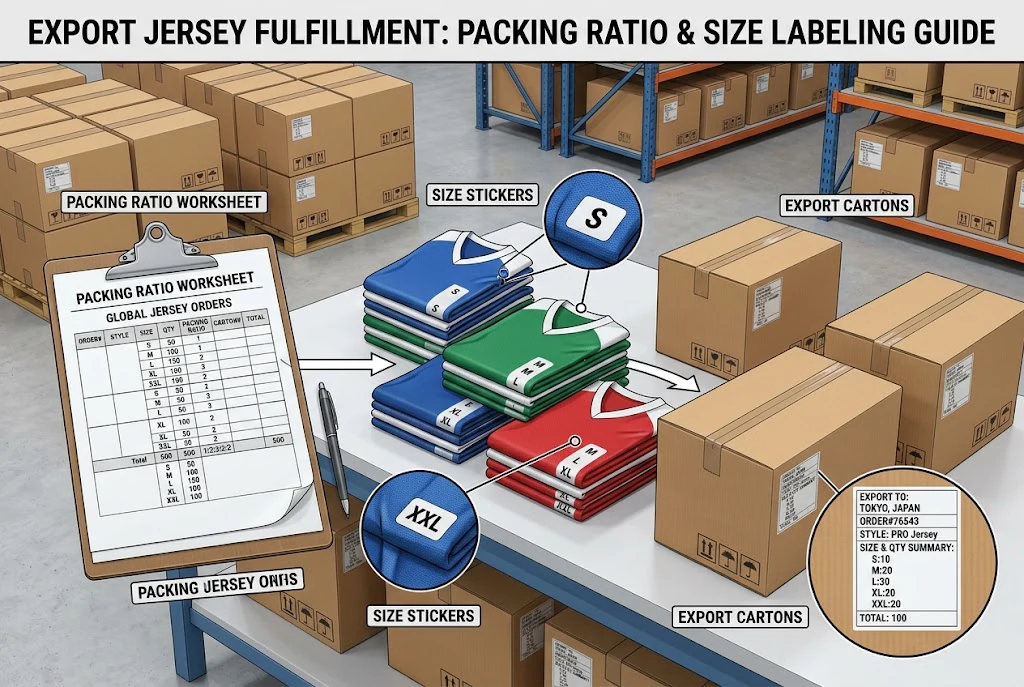
Many size complaints begin after arrival because the carton ratio was planned around factory convenience instead of real demand. If your market sells M and L fast but leaves XXL slow, a balanced-looking carton can still damage cash flow.
We normally align the size mix with channel type. Marketplace sellers need leaner depth and faster replenishment logic, while team distributors can absorb more concentrated size runs. Before bulk confirmation, it is worth using a clear reorder plan and keeping one path open to discuss your bulk order requirements with the supplier if sell-through data changes.
Frequently Asked Questions
Q: Can we convert an Asian XL directly into a US or Canada L?
A: No. We should not convert by label only. We should convert by the finished garment measurements, fit intent, and fabric behavior, because two factories may both call a jersey XL and still produce noticeably different results.
Q: Which measurements matter most for bulk soccer jersey buying?
A: Chest width and body length are the starting points, but they are not enough on their own. We should also review shoulder width, sleeve opening, hem width, and grading jump between adjacent sizes, because those details decide whether the jersey feels balanced when worn.
Q: Should buyers size up automatically for Mexico?
A: Not automatically. Mexico programs often need a different ratio strategy, but the correct move depends on who will wear the jersey and whether the product is sold as fanwear, teamwear, or ecommerce resale stock. The safer method is to test one local fit sample set before locking the carton mix.
Q: How many fit samples should we approve before mass production?
A: For a new supplier, we usually recommend one core sample review plus one corrected fit sample if measurements or silhouette need adjustment. If the order covers multiple cuts such as adult, youth, and player-fit versions, each cut should be approved separately.
Ending
If you are building a resale line or a teamwear program, we can help you verify measurements, fit samples, and size ratios before bulk production. Use our contact page to discuss your bulk order requirements, request a wholesale price list, or ask for samples that match your target market.