
How to Price and Sell Team Soccer Uniforms Packages to Local Clubs
Overview
Local clubs do not buy on jersey price alone. They compare package scope, roster fit, decoration cost, reorder risk, and delivery timing. This guide explains how we price these programs for buyers in the USA, Canada, and Mexico so the quote is easier to approve and easier to repeat.
Price From the Club Budget Backward
Local clubs rarely approve uniforms as an isolated apparel purchase. They usually review them inside a broader youth sports budget plan, where fees, sponsorships, fundraising, and equipment all compete for the same season budget.
For that reason, we price from the club budget backward. We separate mandatory items from optional ones, keep decoration visible, and show what can be postponed to a second phase. A cleaner quote reduces internal debate and makes approval faster.
Build Package Levels Around the Actual Roster
For local clubs, team soccer uniforms packages are not a single jersey decision. They are a roster decision that includes player counts, goalkeeper differentiation, size curves, and a realistic spare ratio for late sign-ups.
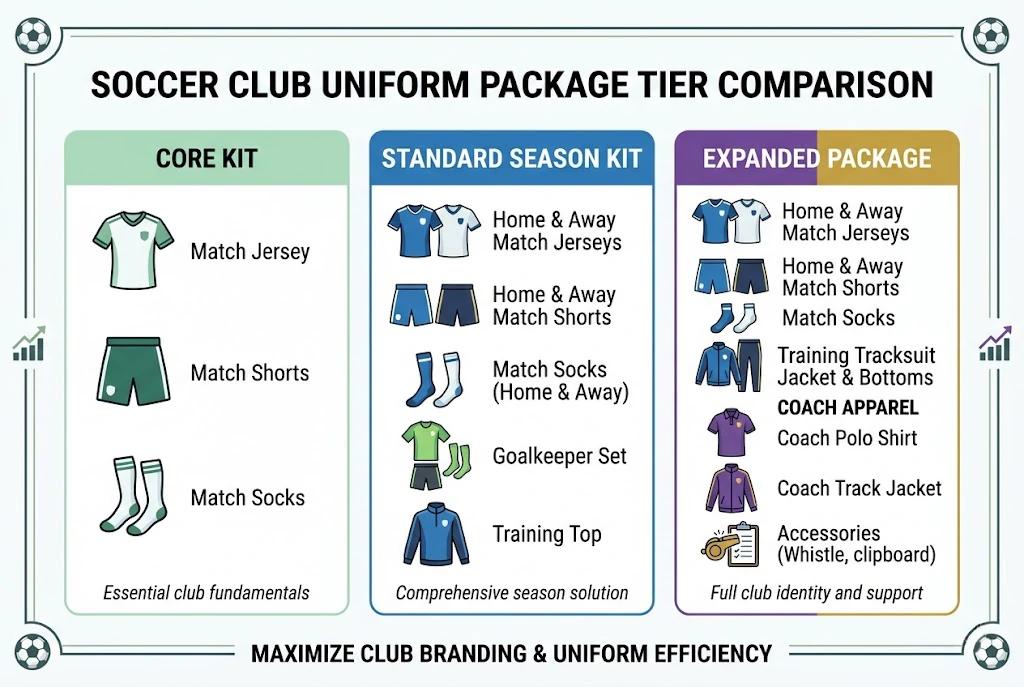
For youth programs, club team jerseys should be quoted with player counts, goalkeeper needs, and a small spare ratio rather than with a flat carton assumption. We usually build three levels: core match kit, standard season kit, and expanded package with training or staff items.
Keep Decoration, Add-Ons, and Reorders Visible
A common quoting mistake is to blend garment cost, printing cost, and packing cost into one number. That looks simple at first, but it becomes difficult to defend when a club changes sponsors, adds players, or asks for partial reorders.
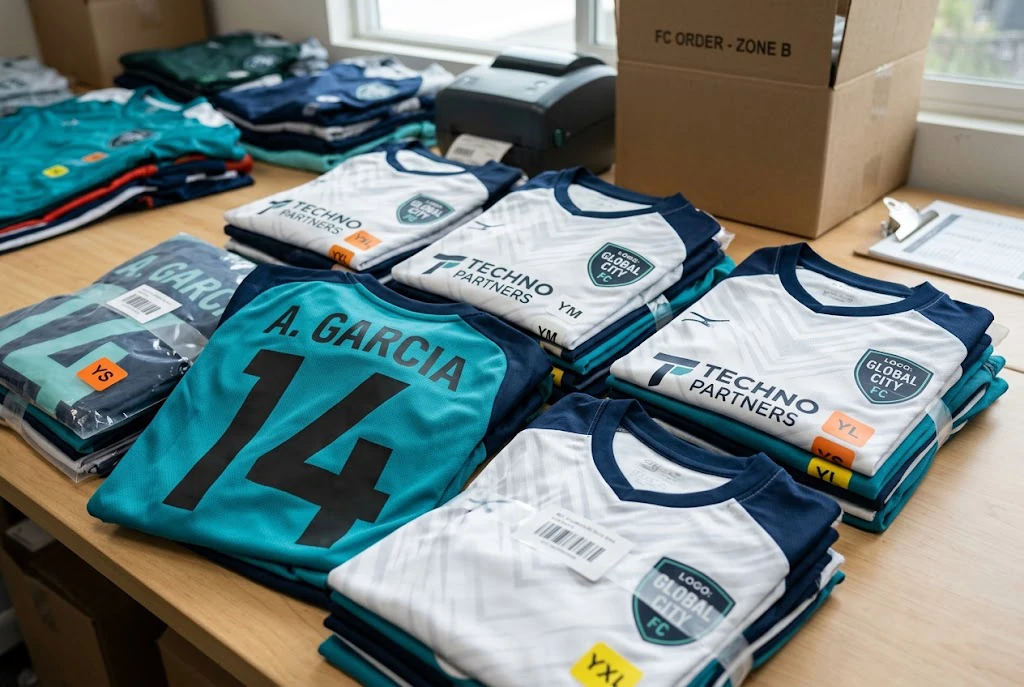
That is where custom name and number application and sponsor placement need their own pricing line. When buyers can see the base garment, the decoration method, and the reorder rule separately, the package feels more controllable and less risky.
Sell With Process Control, Not Just a Low First Quote
Most club buyers are less worried about saving a few cents on day one than about whether the second order will match the first. They want the same color tone, the same trim position, and the same print result when a new player joins mid-season.
Clubs care more about fabric consistency and inspection control than about saving a few cents on the first order. North American clubs are also buying into a cycle where the beautiful game grows for Americans ahead of the 2026 World Cup, so presentation, sponsor visibility, and reorder readiness matter more than they did in older community-buying models.
Sell the Program Like a Procurement Partner
Local clubs do not need a retail pitch. They need a package sheet, visual confirmation, lead time, payment logic, and a clear answer to what happens when sizes change or the roster expands after registration closes.
That is why we sell the program, not only the shirt. A supplier becomes easier to approve when the offer is built around the club’s workflow: who signs off, what must arrive first, what can be optional, and how the next reorder will be handled.
Frequently Asked Questions
Q: What should a starter package include for a local club?
A: A starter package should cover the items the club cannot begin the season without: match jersey, shorts, socks, goalkeeper differentiation, and a basic spare ratio for late roster changes. We usually quote training tops, rain jackets, coach apparel, and fan extras as optional lines so the club can protect the approval budget without losing the ability to expand later.
Q: Should youth teams and adult teams use the same package structure?
A: They can share the same visual system, but they should not always share the same commercial structure. Youth teams usually need a different size ratio, more replacement flexibility, and a tighter price ceiling. Adult amateur teams often care more about fit preference, sponsor exposure, and smaller but more customized orders. The package should follow the buying behavior of the group, not only the design.
Q: How should names, numbers, and sponsor logos be quoted?
A: They should be quoted separately from the base garment whenever possible. That keeps the first order clear and avoids confusion when a club adds players or changes sponsor artwork later. A visible decoration menu also protects both sides during reorders. The club knows what is fixed and what is variable, and the supplier avoids absorbing hidden labor costs.
Q: What matters more to clubs than the cheapest first quote?
A: Reliability usually matters more than the lowest opening number. Clubs remember late deliveries, mismatched shades, missing goalkeeper kits, and inconsistent print placement much more than they remember a small price difference.
A quote becomes stronger when it explains reorder timing, replacement handling, and quality checkpoints in plain language. That is what helps a buyer trust the program for a full season.
Ending
If you are comparing suppliers for the next season, we can build a clean quote around your roster, decoration method, and reorder plan. Use the same approval logic your coaches and club managers need, then contact our wholesale team for a price list, sample options, or a discussion of bulk customization requirements.