
Ordering a Custom Football Jersey with Logo: Bulk Embroidery vs. Sublimation
Overview
Choosing between embroidery and sublimation affects more than logo appearance. It changes jersey feel, artwork limits, MOQ logic, and reorder speed. This guide explains when each method fits bulk football programs, how buyers should review approvals, and what matters most for USA, Canada, and Mexico sourcing decisions. When buyers ask for a custom football jersey with logo, the method decision is rarely only about appearance. It changes how the crest feels on the chest, how the body fabric performs, how quickly a repeat PO can be approved, and where unit cost starts to move. For North American bulk programs, embroidery and sublimation solve different problems.
What embroidery actually buys you
Embroidery adds raised texture, edge definition, and a more traditional badge feel. It works best when the logo is compact, the stitch count is controlled, and the buyer wants the emblem to read as a premium chest detail rather than a full-panel graphic. That is why many fanwear-oriented programs still keep embroidery for crests and small sponsor marks.
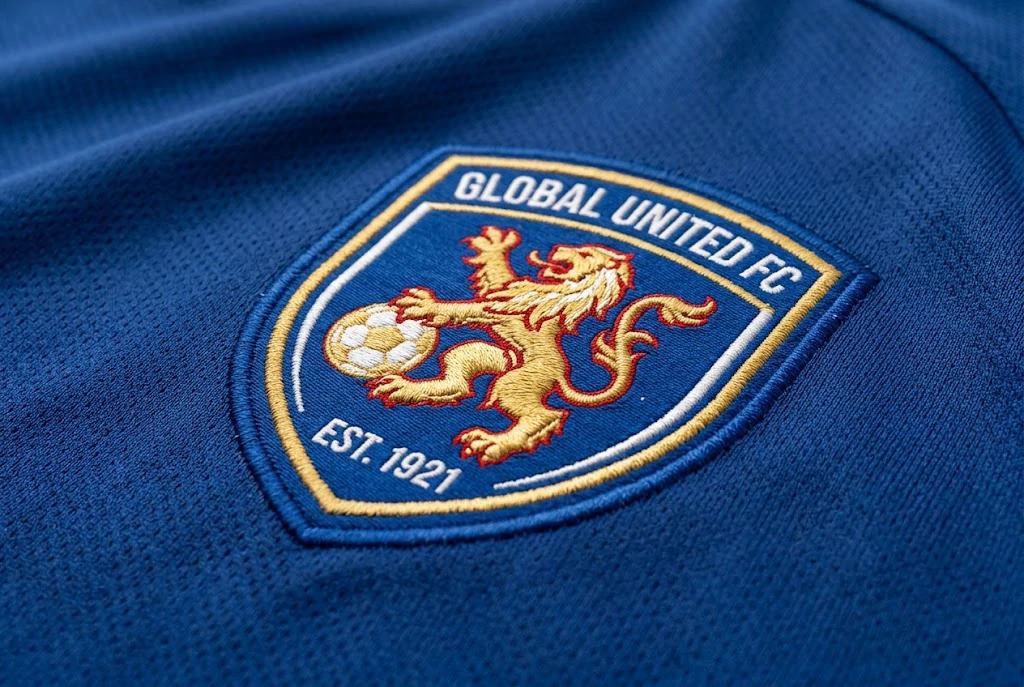
The trade-off is technical, not cosmetic. Dense stitching can stiffen lightweight jersey fabric, reduce clarity on tiny text, and slow sampling when artwork has gradients or very fine outlines. On modern performance jerseys, that matters because buyers are balancing appearance against comfort and repeatability.
When sublimation is the better production method
Sublimation fits programs built on polyester matchwear, large front graphics, and full-color branding. Because the color bonds into the fiber instead of sitting on the surface, the finish stays light, breathable, and visually flat, which is useful for sponsor-heavy layouts and all-over design systems.
It is usually the stronger choice when the logo is not just a crest, but part of the shirt architecture. If the order includes shoulder graphics, sleeve sponsors, back numbers, and coordinated color blocking, sublimation simplifies alignment and keeps the garment easier to wear in training or competition.
Cost, MOQ, and reorder logic
Embroidery often makes sense when the decoration area is small and the base garment is already fixed. Sublimation becomes more efficient when the design spreads across multiple zones or when the buyer wants one artwork system to cover shirts, shorts, and training tops in the same run.
For retail-style club team jersey programs, embroidery still works well for crests, while sublimation handles sponsor-heavy fronts better. Recent trade news on dye sublimation for custom apparel decoration also shows how fulfillment platforms are expanding spot sublimation on 100-percent polyester performance garments.
Artwork setup and approval points
Embroidery needs simplification before beauty. Buyers should review stitch direction, minimum letter height, border thickness, and thread substitutions before approving a sample. For buyers who still need a broader decoration baseline, embroidered vs. printed custom clothing is useful context before comparing logo application on football jerseys.
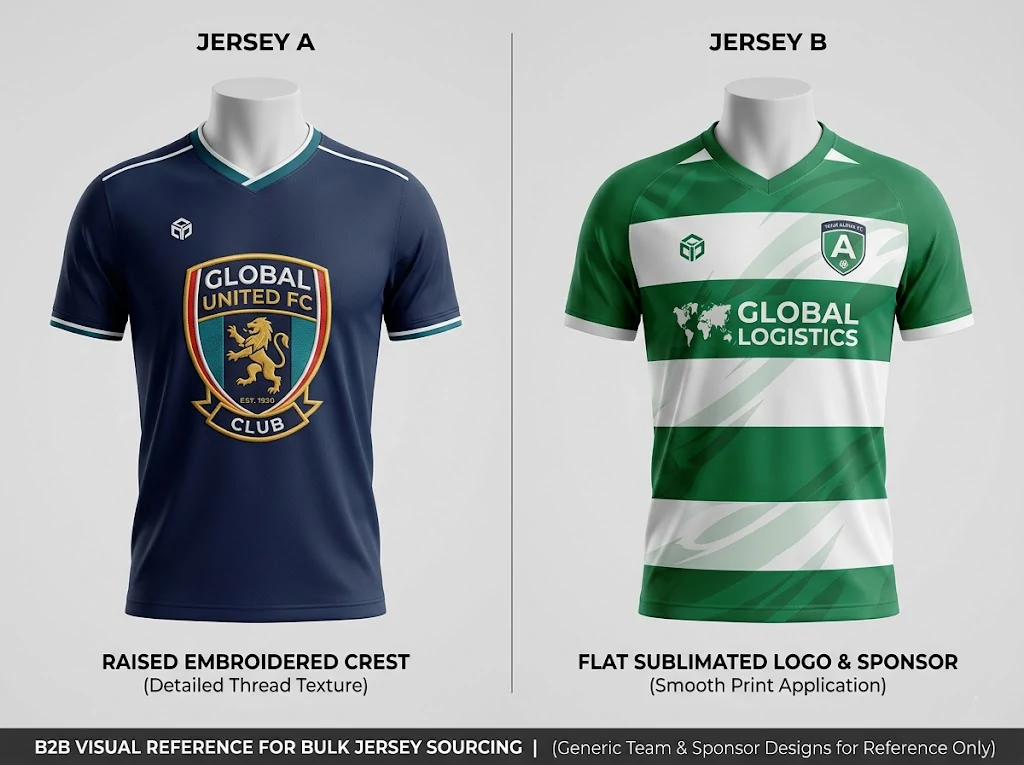
Sublimation needs control before production starts. We usually ask buyers to lock logo position, panel dimensions, seam allowance behavior, color references, and number style in the same approval pack. A stable customization and quality control process matters more than the decoration method itself once you move from samples to repeat orders.
Choosing by end use in USA, Canada, and Mexico
If the order is for supporter retail, resale bundles, or club-inspired merchandise, embroidery can help the jersey feel more badge-led and familiar. If the order is for academies, school teams, events, or fast-moving promotional runs, sublimation usually gives more flexibility across sizes, names, numbers, and replenishment cycles.
The practical decision is not embroidery versus sublimation in the abstract. It is whether the logo is a premium accent or a graphic system. Once that is clear, we can recommend the base fabric, artwork path, sample method, and production sequence with less rework and fewer surprises.
Frequently Asked Questions
Q: Does embroidery make a football jersey feel heavier?
A: It can, especially on lightweight polyester bodies. The effect depends on stitch density, backing choice, and logo size rather than embroidery alone. For compact crests and short text, the added weight is usually manageable. For large logos or dense sponsor marks, sublimation is often the cleaner solution.
Q: Is sublimation better for full-color logos?
A: Yes, in most bulk jersey programs. It handles gradients, fine outlines, and multi-color branding without translating artwork into thread paths. That advantage matters most when the logo connects with sleeve marks, back numbers, or all-over pattern elements. It matters less when the design is a small chest crest.
Q: Which method is easier to reorder?
A: Sublimation is usually easier when the program depends on repeat artwork across many sizes and placements. Once the file and panel map are approved, repeat orders are easier to standardize. Embroidery can also reorder well, but only if the digitized file, stitch count, thread codes, and backing spec stay fixed across runs.
Q: Can buyers combine both methods in one bulk program?
A: Yes, and many serious buyers do. A common structure is an embroidered crest with sublimated body graphics, names, and numbers. The key is to define which element carries the premium look and which element carries the production efficiency. That keeps costing and approvals easier to control.
Ending
If you are comparing crest options, sponsor layouts, or mixed decoration methods for a North American program, we can review your artwork and recommend the most practical path. Use discuss your bulk order requirements to request a wholesale price list, sample options, and a clear quotation before bulk production starts.