
How to Start a Teamwear Brand with Blank Soccer Jersey Sourcing?
Overview
This guide explains how we would build a teamwear brand from blank soccer jersey sourcing: define the buyer, choose the right base garment, align decoration with MOQ, and control quality for repeat orders. It is written for wholesalers, retailers, clubs, and online sellers serving the USA and Europe.
Start with the buyer, not the logo
A teamwear brand should not begin with a badge design or a social media page. It should begin with a buyer definition. In the USA and Europe, the real split is usually between clubs, school programs, local resellers, and online sellers. Each group buys on a different calendar, price ceiling, and size ratio.
Before placing any order, a new teamwear brand still needs a simple business plan for each season. we would define the core use case: matchday uniform, training top, supporter item, or decorated stock for local resale. That decision shapes margin expectations, packaging needs, and whether a blank soccer jersey program is enough on its own or should support a wider collection.
Choose a base jersey that can survive repeat orders
A starting brand does not need the most complex garment. It needs a stable one. We usually look first at fabric hand feel, GSM range, shrinkage control, collar recovery, and color continuity across repeat lots. A jersey that samples well but changes shade in bulk will damage trust quickly.
If your range also includes supporter-led capsules, it helps to keep club team jerseys as a reference category rather than forcing every product into one blank program. That keeps your assortment cleaner and makes it easier to separate teamwear basics from fashion-driven drops.
Build decoration around your order model
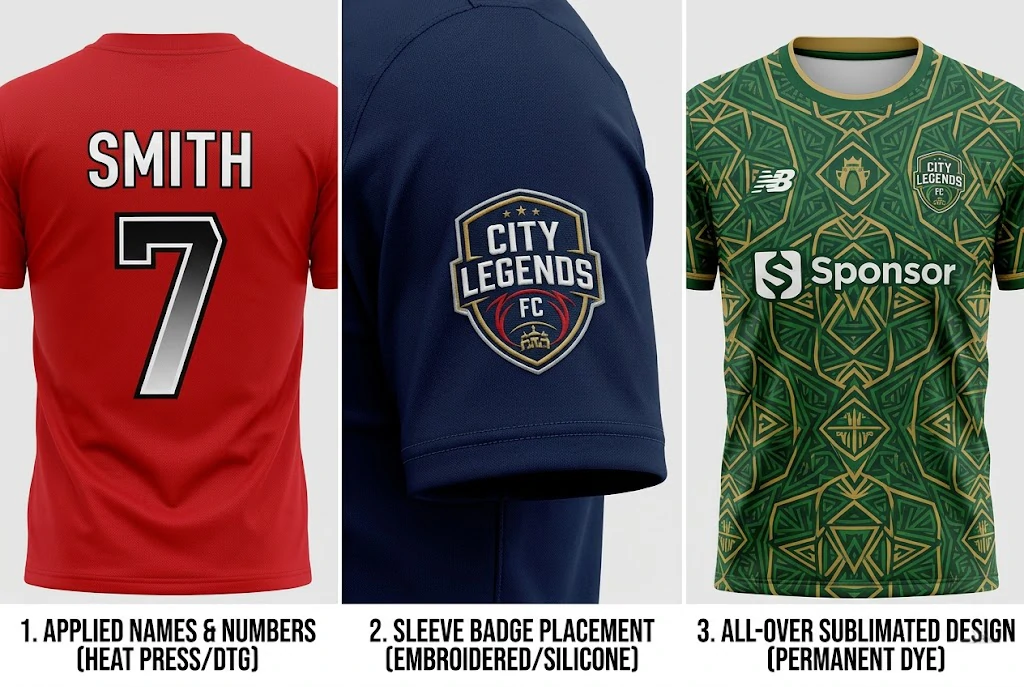
Decoration should follow the business model, not the other way around. For local clubs and school teams, the supplier must handle names, numbers, sleeve badges, and custom packaging options without sending the order through several vendors. That reduces errors and shortens dispatch time.
We usually advise buyers to reserve full sublimation for programs that truly need all-over identity, sponsor density, or exact school colors. For simpler launches, stock blanks with controlled add-ons often create a better balance between speed, cash flow, and design flexibility.
Keep the first MOQ small enough to learn
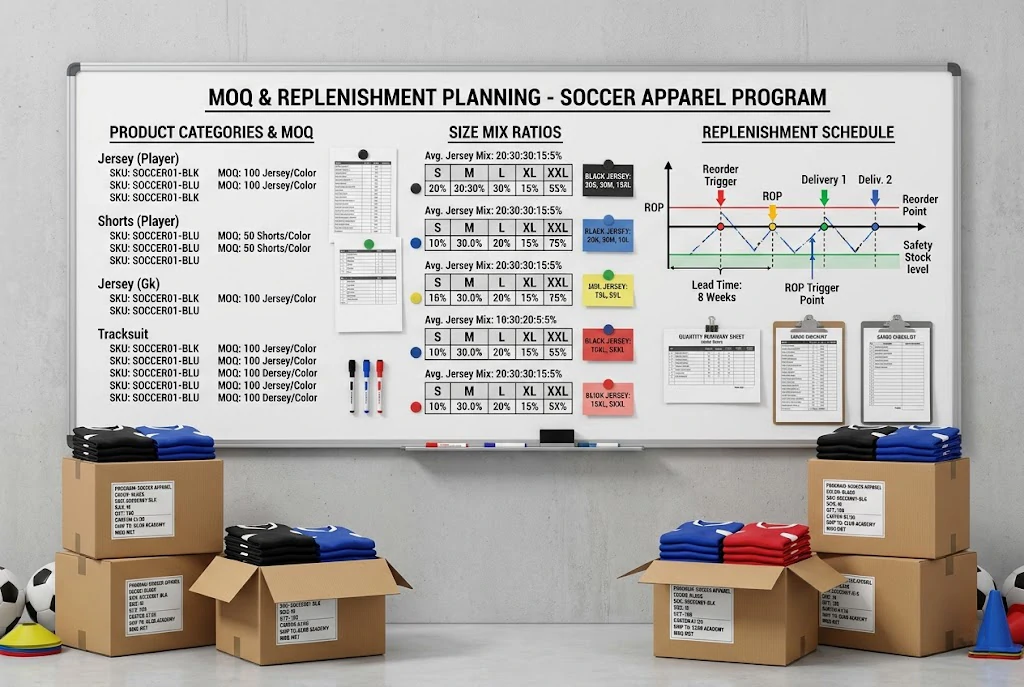
The first order should teach the brand something. It should not lock the brand into twelve colors, wide size depth, and slow-moving stock. We prefer an opening range with a narrow color matrix, tested size ratios, and one replenishment plan that can be repeated without redesigning the whole line.
This matters because major tournaments can change demand faster than most small brands expect. A brand that buys too heavily before learning its winning sizes and colors often ends up discounting inventory instead of funding the next reorder.
Treat QC and compliance as part of the product
For USA and Europe, reliability matters more than a low opening price. That is why fabric stability, color fastness, and AQL inspection should be checked before the first bulk run, not after a complaint. The buyer also needs to confirm carton marking, country-of-origin labeling, and barcode or pack-list accuracy if resale is part of the plan.
A useful supplier is not just a maker of shirts. It is a control point for repeatability. When we review a new teamwear project, we want to know how the supplier manages replacement pieces, shade matching, and reorder consistency, because those are the details that protect wholesale accounts over time.
Frequently Asked Questions
Q: Is a blank jersey model better than launching with fully custom teamwear?
A: In most cases, yes. A blank-based launch lowers development cost, shortens lead time, and gives the brand room to test real demand before committing to deeper custom work. Fully custom programs make more sense after the brand understands its winning fits, color demand, and reorder frequency. Without that data, custom development can absorb cash that should be used for sampling and replenishment.
Q: What MOQ should a new teamwear brand expect?
A: MOQ depends on how much of the garment is truly custom. Stock blanks with added names, numbers, or badges usually allow a lower starting point than garments requiring custom-dyed fabric, special collars, or unique trim packages. We suggest comparing MOQ together with reorder speed, mixed-size flexibility, and decoration capacity. A low MOQ is less useful if the second order becomes slow or inconsistent.
Q: How should we choose between sublimation, heat transfer, and embroidery?
A: The right choice depends on the role of the garment. Sublimation works well for strong color coverage and complex visual identity, while heat transfer is practical for names, numbers, and shorter personalization runs. Embroidery is better used selectively, usually on polos, outerwear, or presentation items rather than lightweight match jerseys. The method should match the product category, margin target, and expected reorder pattern.
Q: What makes a supplier reliable for USA and Europe?
A: A reliable supplier can repeat the same garment standard across sample and bulk stages. That includes fabric feel, measurement tolerance, print durability, labeling accuracy, and stable packing execution. We also look at communication discipline. Fast quotation is useful, but clear approval records, inspection logic, and replacement handling are what make the relationship workable at scale.
Ending
If you are comparing blank programs, sample development, or decoration workflows for your next line, contact our wholesale team to get a wholesale price list, request samples, and discuss your bulk order requirements with a sourcing team that understands repeat orders, custom finishing, and B2B delivery expectations.