
Custom Football Fan Jersey Wholesale: Tapping into the Thriving Fanwear Market
Overview
This article explains how B2B buyers can evaluate football fan jersey wholesale programs by demand pattern, product structure, customization fit, quality control, and replenishment logic. It is written for importers, resellers, and teamwear buyers targeting the USA and Europe.
1.Market Demand Is No Longer One-Dimensional
A custom football fan jersey wholesale program works when buyers treat it as a category decision rather than a one-off design order. In the USA and Europe, demand usually comes from three lanes at once: event-driven spikes, club-and-country identity purchases, and year-round casual fanwear.
For many buyers, football shirts now work as both fan identity and casualwear, so demand no longer peaks only on match days. That changes assortment planning, because the stronger strategy is often built on narrow, repeatable ranges rather than one large speculative buy.
2.Product Architecture Decides Whether the Range Can Scale
The first sourcing question is whether the range is built around licensed merchandise, supporter-style custom designs, or blank jerseys prepared for local branding. These are different procurement lanes with different margin logic, packaging needs, and operational risk.
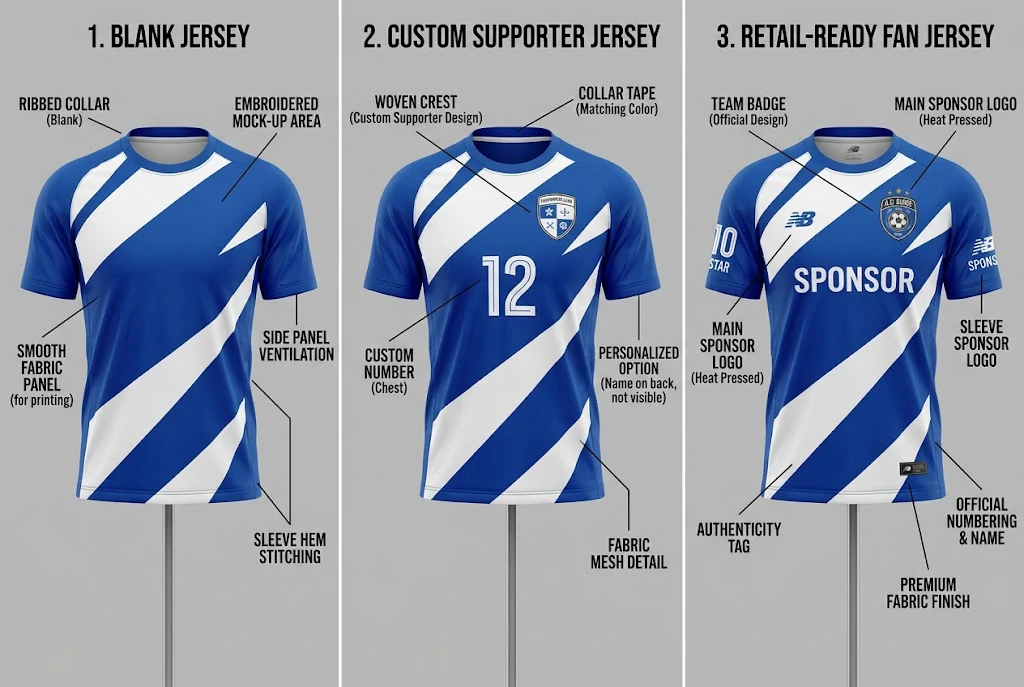
For tournament-led demand, a focused national team jersey range is usually easier to replenish than a wide mixed catalog. For evergreen demand, buyers often do better with a small core line of club-inspired colors, youth sizes, and region-specific size curves than with too many short-lived SKUs.
3.Customization Should Match the Sales Channel
Customization adds value only when it fits the channel. Wholesale distributors may want flexible blank stock for local printing, while marketplace sellers often need finished presentation, stable photography, simple variant logic, and fewer customization choices.
For private-label sellers, custom name, number, and badge application should be chosen by channel, because the right decoration method for a marketplace listing is not always the right one for a supporter group order. The same design can perform very differently depending on whether the finish is heat transfer, embroidery, or sublimated detail.
4.Quality Control Is What Makes Repeat Business Work
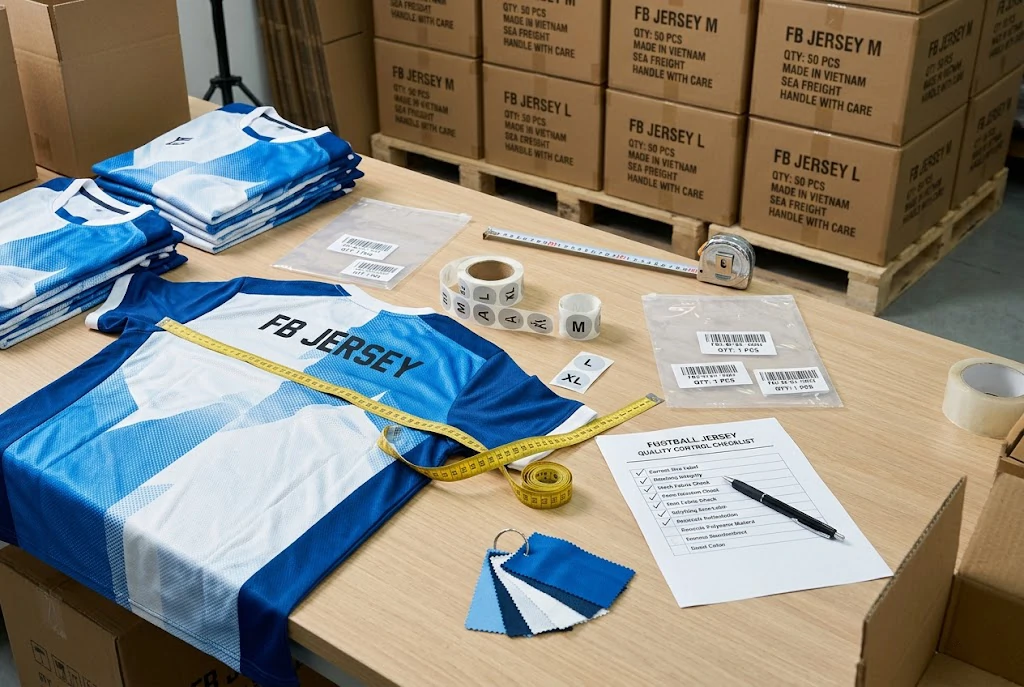
The first bulk order proves whether the design can ship; the second proves whether the supply base is reliable. Buyers usually lose margin on preventable issues such as shade drift, unstable print adhesion, badge placement variance, and mixed carton labeling rather than on garment cost alone.
Repeat business usually depends less on the first sample and more on fabric consistency and AQL-based inspection across later batches. When we evaluate suppliers, we look for measurable control points, clear packing standards, and the discipline to reproduce the same finish across reorder cycles.
Replenishment Speed Shapes Margin More Than Opening Price
In fanwear, timing often matters more than the first quoted unit price. Tournament cycles still create short and intense demand windows, especially when football gains wider retail attention in North America.
That is why buyers should compare lead time, trim readiness, replenishment rules, and carton discipline together. A slightly higher unit cost can still produce a better landed margin if the program ships on time, packs correctly for the channel, and allows controlled repeat ordering instead of overbuying.
Frequently Asked Questions
Q: What is the difference between a fan jersey program and a blank teamwear program?
A: A fan jersey program is built around supporter demand, club or country storytelling, and retail-friendly presentation. A blank teamwear program is built around decoration flexibility, faster turnover, and broader use across schools, local clubs, academies, and resellers.For buyers, the difference affects fabric choice, trim detail, size ratios, and packaging. It also changes the margin model: fanwear depends more on design appeal and timing, while blanks depend more on repeatability and decoration efficiency.
Q: What MOQ should buyers expect for custom fanwear?
A: MOQ is usually determined by how much of the garment is truly custom. Orders based on ready blanks with added names, numbers, or badges can start lower than programs that require custom-dyed fabric, unique collars, woven labels, or individual packaging.The practical question is not the headline MOQ but the cost break between sample stage, first bulk order, and repeat order. Buyers should compare MOQ together with replenishment speed, trim flexibility, and whether mixed sizes can be packed in one run.
Q: How should buyers plan size ratios for the USA and Europe?
A: A single global size curve rarely works. USA demand often needs broader coverage in adult sizes and more tolerance for casual everyday wear, while many European programs sell better with a tighter ratio around core adult sizes and youth extensions.The safer method is to build one base size ratio and adjust it by channel, country, and customer type. Marketplace sellers, supporter groups, and offline wholesalers usually need different size distributions even when they sell the same design.
Ending
If you are planning tournament demand, retail dropshipping, or bulk supporter programs, contact our wholesale team to request a wholesale price list, review sample options, or discuss your bulk order requirements.