
Cheap Custom Soccer Uniforms: How Direct Factories Keep Costs Down Without Losing Quality
Overview
Cheap custom soccer uniforms are not defined by the lowest quote. They are defined by controlled specifications, suitable materials, the right decoration method, stable inspection standards, and realistic freight planning. Buyers who understand these points usually save more over repeat orders.
Cost control starts with a stable specification
The fastest way to lose money on a “cheap” program is to approve an incomplete brief. When size tolerance, collar shape, logo placement, player naming, and packaging details are vague, the factory has to price risk into the order or recover it later through substitutions.
Direct factories usually keep costs lower when we lock one version of the spec before bulk production. For academies and school programs, that same discipline also applies to kids soccer jerseys, where size ratios and repeatability matter as much as the first quote.
Fabric and trim choices create most of the price gap
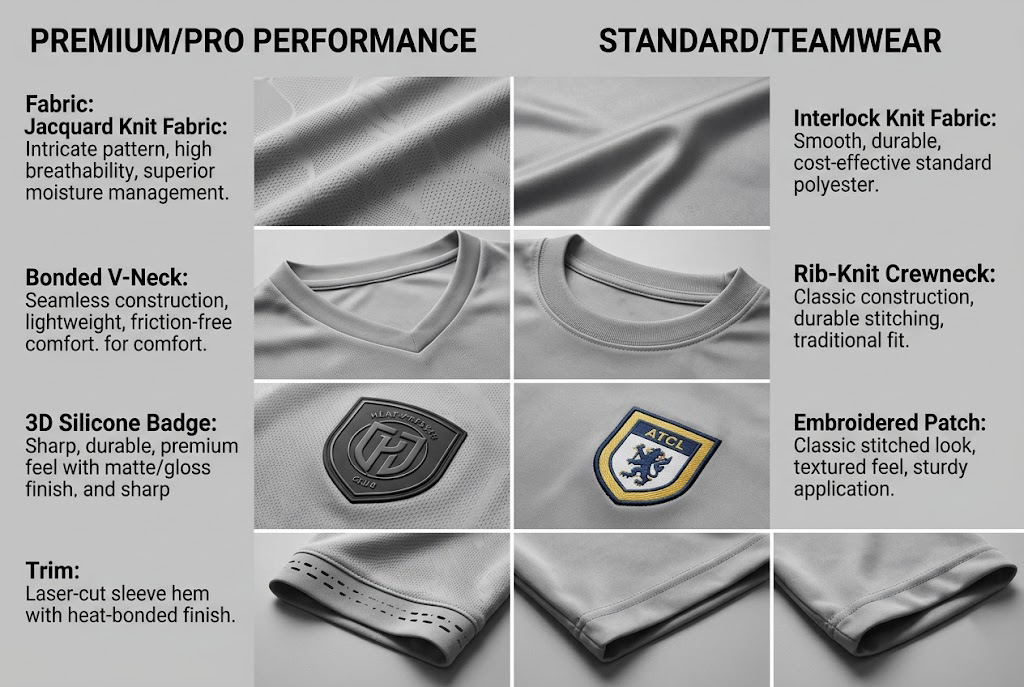
Many buyers compare only GSM, but fabric cost is also shaped by yarn quality, knit stability, moisture handling, opacity, and finishing consistency. A cheaper cloth can still work if the performance target is clear, but it stops being cheap when it creates shade variation, twisting, or short wear life.
Trim decisions matter in the same way. Rib collars, woven badges, multiple label layers, premium polybags, and custom carton marks each look minor on paper, yet together they change the unit cost more than many buyers expect. That is why we keep fabric testing and inspection routines visible before bulk approval.
The print method should match the order structure
Sublimation is not automatically the cheapest choice. It is efficient when the design covers large areas, when each player needs different names and numbers, or when the order will repeat with only small artwork changes. In those cases, setup efficiency and reorder speed can outweigh the higher design-prep discipline.
For simpler programs, a limited logo count with controlled artwork can be cheaper through transfer or screen methods. The real question is not which method sounds more advanced, but whether the factory can manage custom names, numbers, and packaging specs without creating avoidable manual work between sample and bulk.
Quality control is where low-price programs usually break
A low quote remains workable only when the supplier follows AQL sampling standards and checks size tolerance, color consistency, print position, workmanship, and carton markings before shipment. Buyers usually feel the cost of weak QC through claims, delayed launches, and poor repeat confidence rather than through the original invoice.
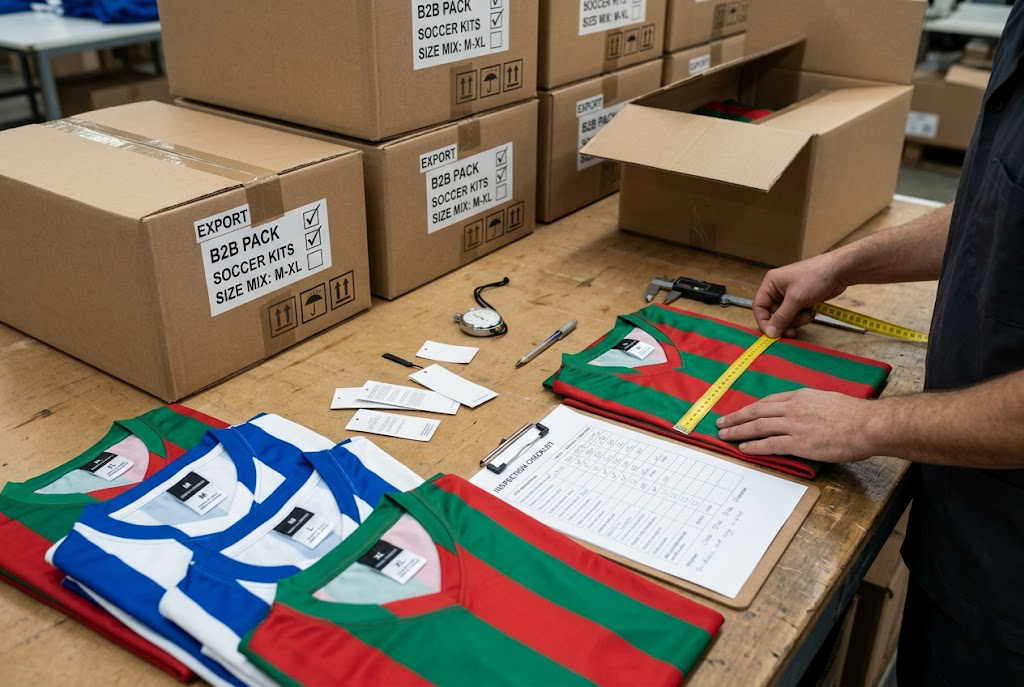
For that reason, we treat pre-production approval and pre-shipment inspection as cost-control tools, not overhead. A factory that catches defects before dispatch protects margin better than one that simply offers the lowest FOB number on the first spreadsheet.
Landed cost decides whether the quote is actually cheap
For buyers in the USA, Canada, and Mexico, landed cost can move with tariff exposure in apparel sourcing as much as with sewing cost. Freight timing, carton density, labeling accuracy, and destination mix often decide whether a seemingly low quote stays competitive after delivery.
This is why experienced buyers compare complete cost structures instead of unit price alone. If the factory can consolidate SKUs, control carton volume, and leave room for replenishment planning, the order usually performs better over one season rather than only on the first PO.
Frequently Asked Questions
Q: What order size usually makes direct-factory sourcing efficient?
A: Direct-factory sourcing becomes more efficient when the order is large enough to standardize fabric, trim, and decoration in one repeatable setup. If the run is too small, approval, setup, and freight costs can absorb most of the savings, so buyers should compare landed cost rather than FOB only.
Q: Is sublimation always the lowest-cost decoration method?
A: No. Sublimation works well when the design uses full-panel graphics or when player names and numbers change frequently. For simpler programs, controlled screen print, transfer, or selective embroidery can be more economical.
Q: How should buyers verify quality before final payment?
A: Buyers should approve a pre-production sample, lock the measurement chart, and inspect a packed batch before shipment. The key checks are fit, color, print position, labeling, and carton accuracy against the approved specification.
Q: Why can two factories quote similar fabric weight but deliver very different jerseys?
A: Fabric weight does not explain hand feel, stretch recovery, opacity, colorfastness, or sewing stability. The real difference often comes from yarn grade, knit consistency, finishing control, and how closely the bulk order follows the approved sample.
Ending
If you are comparing suppliers for North America, we can build a quote around your target price, decoration method, size ratio, and shipping window. Send us your tech pack or reference sample and contact our wholesale team to review wholesale pricing, sample options, and practical lead times for your next bulk order.